Understanding Your Olive Oil's Natural Lifespan
Before we delve into preserving olive oil's freshness, it's essential to grasp its natural lifespan. Unlike refined oils, extra virgin olive oil isn't shelf-stable. It's a fresh product, much like fruit juice, with a limited life. Several factors influence its freshness, including the olive variety, production methods, and the oil's initial quality.
Decoding Dates and Recognizing Freshness
The first step is understanding harvest and bottling dates. Ideally, your olive oil should be bottled shortly after harvest. Degradation begins immediately after olives are picked. The harvest date, often found on the label, offers a more accurate gauge of the oil's age than the bottling date. Fresh extra virgin olive oil boasts a vibrant, fruity aroma and a characteristic peppery finish.
The Oxidation Cascade
The primary cause of olive oil's decline is oxidation. Picture a cut apple browning – that's oxidation. Similarly, exposure to light, heat, and air triggers a chain reaction in olive oil, breaking down its beneficial compounds and flavor molecules. This oxidation cascade results in rancidity, diminishing the oil's culinary and health benefits.
The shelf life of extra virgin olive oil (EVOO) is generally between 12 and 18 months. Proper storage, however, can extend this. Maintaining a consistent, refrigerator-like temperature allows for longer enjoyment without significant quality or flavor loss. Learn more about olive oil shelf life here.
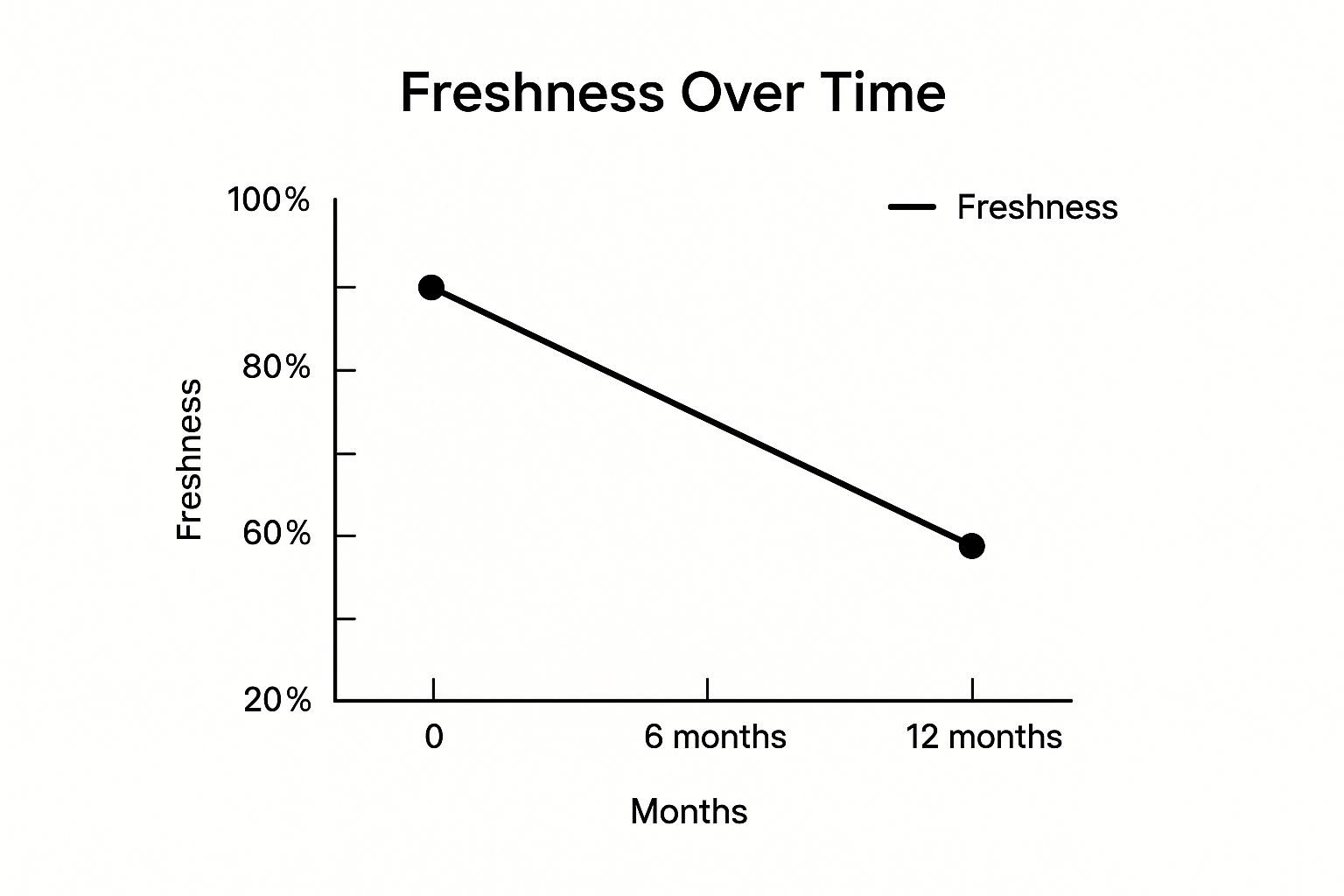
This chart illustrates the typical freshness decline of olive oil over time, beginning at 100% at harvest. Even with ideal storage, freshness gradually decreases. After six months, roughly 80% of peak freshness remains, dropping to about 60% at the one-year mark. This underscores the importance of proper storage to slow this decline and enjoy your olive oil's full potential.
To further understand how different types of olive oil age, let's examine the following table:
Shelf Life of Different Olive Oil Types
Comparison of typical shelf life durations for different olive oil varieties under standard conditions
| Oil Type | Average Shelf Life | Signs of Degradation |
|---|---|---|
| Extra Virgin Olive Oil | 18-24 months | Loss of aroma, peppery flavor, and color; rancid odor |
| Virgin Olive Oil | 18-24 months | Loss of aroma and flavor; rancid odor |
| Olive Oil (blend of refined and virgin) | 24 months | Loss of flavor; rancid odor |
| Light Olive Oil (refined) | 24 months | Loss of flavor; rancid odor |
This table highlights that while most olive oil types have a similar shelf life, the signs of degradation can differ. Extra virgin olive oil, with its complex flavor profile, shows more noticeable changes as it ages compared to refined oils. Investing time and effort in proper storage is crucial for preserving your olive oil investment.
The Temperature Factor: Your Oil's Biggest Vulnerability
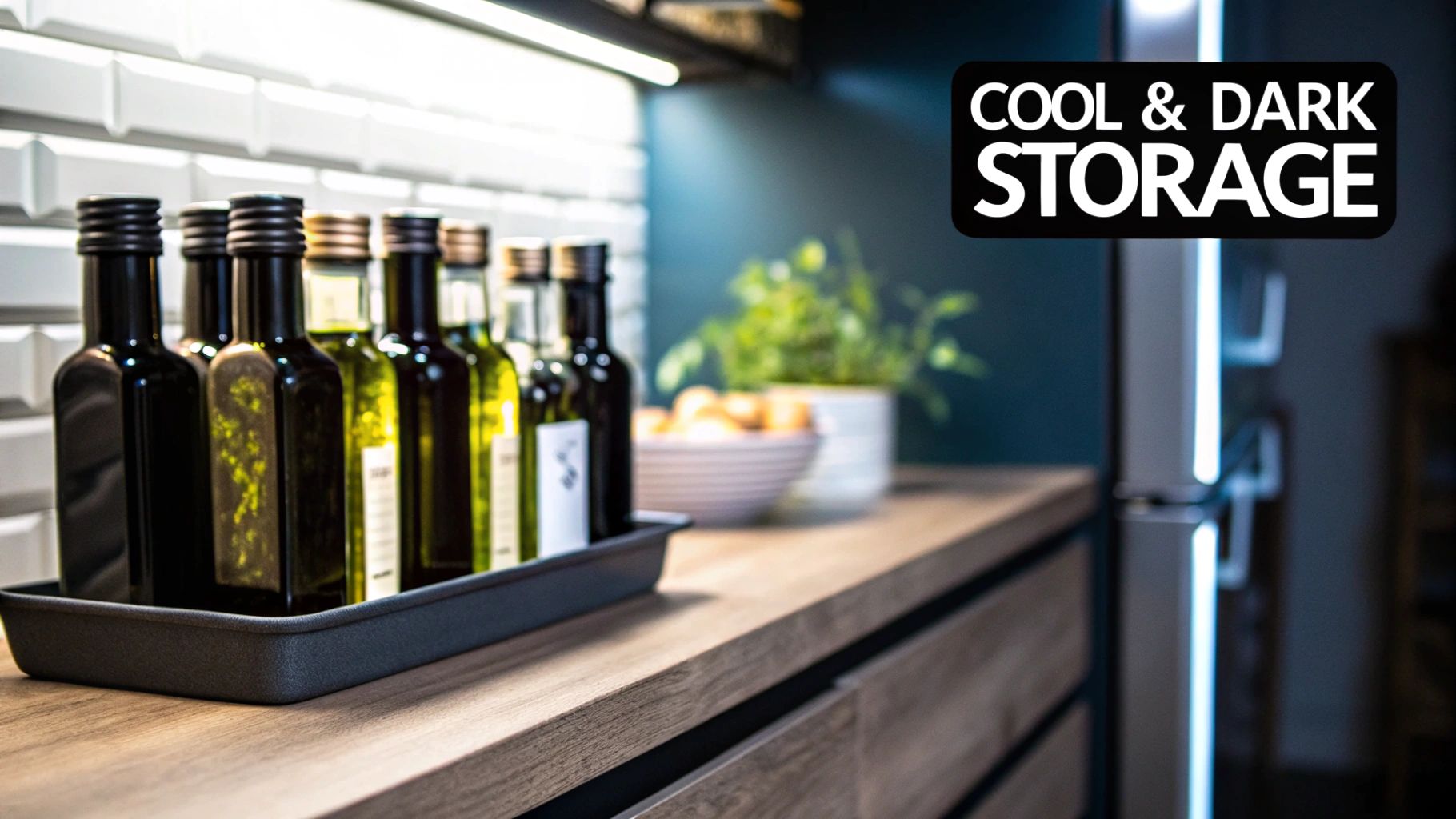
As we've discussed, extra virgin olive oil is a delicate product. Preserving its freshness requires careful attention, especially when it comes to temperature. Temperature isn't just a factor; it's the most critical element in maintaining your olive oil's robust flavor and valuable health benefits. Heat accelerates the breakdown of polyphenols, the powerful antioxidants responsible for many of olive oil's health-boosting properties.
The Science Behind Heat and Degradation
Think of polyphenols as tiny, active molecules in constant motion. Heat increases this molecular activity, causing more frequent and forceful collisions. This leads to degradation, the breakdown of these important compounds, reducing the oil's overall quality. It's similar to shaking a carbonated drink; the increased activity destabilizes the mixture and causes it to lose its fizz. Likewise, excessive heat destabilizes the polyphenols, leading to a loss of beneficial properties.
Consistent cool storage is essential. Studies show that storing olive oil at lower temperatures significantly extends its shelf life. For example, olive oil stored at 10°C (50°F) can last for over 36 months, while oil stored at 16°C (61°F) lasts approximately 21 months. This demonstrates how cooler temperatures slow down the oxidation process that degrades olive oil. You can explore this topic further here.
The Refrigeration Debate: Myth vs. Reality
Many people believe refrigerating olive oil is necessary. However, it's more complex than that. Refrigeration can cause the oil to solidify, often mistaken for spoilage. This solidification is a natural process, and the oil will return to its liquid state at room temperature. However, repeated temperature fluctuations between a cold refrigerator and room temperature can be more detrimental than consistently storing the oil at a slightly warmer, stable temperature.
Practical Temperature Management
Finding the right balance for your olive oil storage is crucial. Here are a few practical strategies:
- Cool, Dark Pantry: A perfect location, away from heat sources like stoves and ovens.
- Temperature-Controlled Cabinet: For true olive oil enthusiasts or those living in warmer climates, a dedicated cabinet offers optimal temperature stability.
- DIY Solutions: Simple solutions like storing oil in a basement or a cooler with ice packs can be effective.
- Avoid Direct Sunlight: UV rays accelerate oxidation, even in tinted glass bottles.
Finding a happy medium between temperature consistency and practical storage is essential. You don't need complex systems, but simply avoiding temperature extremes and fluctuations significantly impacts your olive oil's freshness and longevity. This, in turn, helps you enjoy the maximum flavor and health benefits of this valuable culinary ingredient.
Choosing the Perfect Container: Beyond Basic Bottles

Proper olive oil storage is crucial for maintaining its quality and flavor. Choosing the right container is just as important as consistent temperature control. The vessel you select significantly impacts the oil's longevity and taste. Moving beyond the basic bottle is essential for preserving freshness. Let's explore various storage options and discover the ideal characteristics for optimal preservation.
Material Matters: Glass, Metal, or…?
The container material plays a vital role in protecting olive oil from light and oxygen. Dark glass is the gold standard, effectively blocking harmful UV rays that degrade quality. Clear glass offers minimal protection, accelerating oxidation and flavor loss. This explains why high-quality olive oils are often packaged in tinted bottles.
Metal containers might seem airtight, but they can impart metallic off-flavors over time. This is especially true for tin or aluminum. Stainless steel is a better option due to its lower reactivity. However, it doesn't offer the light-blocking benefits of dark glass.
Research comparing tinplate tin and greenish glass for olive oil storage revealed interesting findings. Greenish glass at lower temperatures (6°C/43°F) better preserved positive attributes like bitterness and pungency. Tinplate tin at higher temperatures (26°C/79°F) developed rancid flavors due to increased oxidation. Explore this study further here. For most, dark glass offers the best balance of protection and practicality.
Airtight is the Right Way: Minimizing Oxidation
Ensuring an airtight seal is paramount. Oxygen is a major enemy of olive oil, causing oxidation and rancidity. Choosing containers that minimize air exposure is key.
Consider these options:
-
Dark Glass Bottles with Tight Seals: Excellent light protection and a good seal against air. Look for screw caps or stoppers that create a firm closure.
-
Stainless Steel Dispensers with Airtight Spouts: Easy pouring and minimized air exposure. Ensure the dispenser is high-quality, food-grade stainless steel.
-
Bag-in-Box Containers: This increasingly popular option minimizes air exposure during dispensing. The collapsing bag pushes out air, preventing oxidation, making it suitable for long-term storage.
-
Ceramic Cruets: Traditional and aesthetically pleasing. A good choice if the lid fits tightly. Ensure the glaze is non-reactive to avoid affecting the oil.
Transferring Oil: Handling with Care
Transferring olive oil to a better storage container requires careful handling. Minimize air exposure by working quickly. Use a funnel to prevent spills. Ensure the new container is clean and dry to avoid introducing moisture or contaminants. These precautions maximize freshness and flavor for weeks or even months.
Beyond the Basics: Evaluating Specialty Containers
Some specialty containers claim to extend olive oil freshness through innovative designs. However, evaluate these claims critically. Air-reduction systems may not always be as effective as advertised. UV-filtering containers can offer some protection but shouldn't replace proper dark storage. The main takeaway: a simple dark glass bottle with a tight seal, combined with good storage habits, is often sufficient. Focus on proven effectiveness over marketing hype when choosing a container. Consider material, airtightness, and light-blocking properties.
Battling Light and Oxygen: The Invisible Destroyers
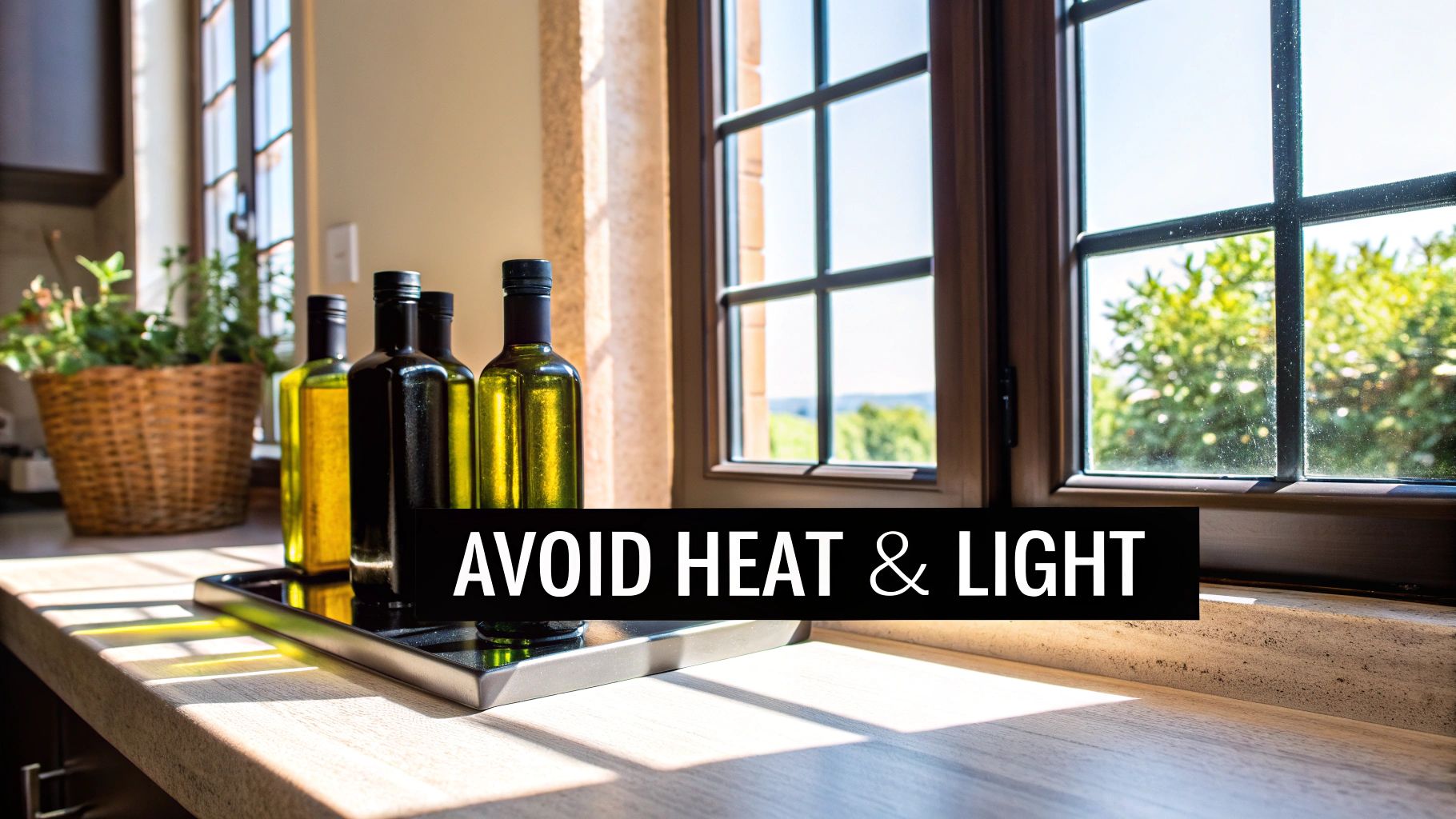
Just as temperature fluctuations can damage your olive oil, light and oxygen are two more subtle enemies working against its freshness. These unseen forces constantly degrade the oil's quality, impacting both flavor and nutritional content. Understanding their effects is the first step to preserving your olive oil.
Photodegradation: When Light Becomes the Enemy
Light, especially UV radiation, initiates a process known as photodegradation. This process breaks down the complex flavor molecules and beneficial antioxidants present in olive oil, similar to how sunlight fades colors over time. Different wavelengths of light cause unique chemical reactions within the oil, resulting in a loss of the fruity aromas, peppery notes, and vibrant green color associated with fresh, high-quality olive oil. This means even regular kitchen lighting can contribute to deterioration.
Oxygen: The Oxidation Culprit
Exposure to oxygen is another significant factor in olive oil degradation. Each time you open a bottle, you introduce oxygen, which starts the process of oxidation. This process, much like the browning of a sliced apple, changes the chemical composition of the oil. Oxidation diminishes the unique flavors and aromas, eventually causing the oil to become rancid. Leaving the cap off your olive oil will significantly speed up this process.
Practical Protection: Shielding Your Olive Oil
Fortunately, several practical steps can minimize light and oxygen exposure. Selecting proper storage containers is crucial. Learn more about the different types of disposable food containers. Dark-colored glass containers are ideal, providing excellent protection from UV radiation. Airtight seals are also essential for limiting oxygen exposure.
Minimizing Exposure: Smart Storage Solutions
Thinking about where you store your olive oil is equally important. A cool, dark cupboard or pantry, away from direct sunlight and heat, is the best location. Small changes can make a big difference. For example, storing oil in a closed cupboard instead of on the counter dramatically extends its shelf life. Cupboards offer a more stable, darker environment, minimizing both light and temperature variations.
Additionally, consider using smaller bottles or transferring oil from larger containers into smaller ones as you use it. This reduces the air space within the container, which in turn minimizes oxidation and preserves the oil’s freshness.
Innovative Techniques: Borrowing from the Pros
Commercial techniques for oxygen reduction can also be applied at home. Bag-in-box containers, with their collapsing bag design that minimizes oxygen contact, are gaining popularity. You don’t need special equipment to adapt this idea. Simply transferring your olive oil to smaller, airtight containers as you deplete your supply greatly reduces oxygen exposure and helps maintain optimal flavor and quality. By understanding the detrimental effects of light and oxygen, and taking simple steps to minimize their impact, you can significantly extend the freshness, flavor, and health benefits of your olive oil.
The Real Value of Preserving Olive Oil Quality
Understanding how to store olive oil properly isn't just about maximizing flavor; it's a smart investment strategy. High-quality olive oil often comes with a higher price tag. Letting it degrade due to improper storage essentially wastes that investment. Let's delve into the economics of freshness and explore how proper storage elevates both the culinary and financial aspects of your olive oil.
Calculating the Cost of Degradation
Consider the price difference between a standard olive oil and a premium extra virgin olive oil. Premium oils are typically more expensive per bottle. However, with proper storage, a premium oil's lifespan increases significantly. This can actually make the per-use cost lower than a cheaper, faster-degrading oil. For example, if proper storage doubles a premium oil's life, the effective cost per use is halved.
Economic Impact of Proper Olive Oil Storage
The table below demonstrates the financial benefits of proper olive oil storage by showing how different methods impact quality, value retention, and usable life.
| Storage Method | Quality Retention (%) | Estimated Value Retention (%) | Extended Usable Life |
|---|---|---|---|
| Dark, cool pantry in airtight container | 90-95 | 90-95 | 18-24 months |
| Cool, dark cupboard in original bottle | 80-85 | 80-85 | 12-18 months |
| Exposed to light and heat | <50 | <50 | 3-6 months |
Proper storage, as shown in the table, directly correlates with maintaining the quality and value of your olive oil. Investing in airtight containers and a dedicated cool, dark storage space can significantly extend the usability and reduce waste.
Expert Insights: How Professionals Judge Freshness
Professional chefs and olive oil competition judges are experts at assessing freshness. They look for specific quality indicators, including:
-
Aroma: Fresh olive oil boasts bright, fruity aromas. Degradation leads to muted aromas and off-notes like rancidity or mustiness.
-
Flavor: The peppery finish of high-quality extra virgin olive oil fades with age and improper storage.
-
Color: While not a definitive indicator, a vibrant green hue often suggests freshness. A dull or yellowish color may indicate degradation.
These professionals understand the rapid deterioration caused by improper storage, particularly light, heat, and oxygen exposure. They meticulously preserve their oils, utilizing techniques adaptable for home use.
Restaurant Secrets: Scaling Freshness for the Home
Restaurants, despite using large quantities of olive oil, maintain quality through specific practices. Many use stainless steel dispensers with airtight spouts, minimizing light and oxygen exposure. They also control storage temperatures, often using cool, dark pantries. These professional practices can be easily adapted for home kitchens. Using smaller, dark glass bottles and airtight pour spouts significantly extends freshness.
Investing Wisely: Premium vs. Everyday Oils
Understanding olive oil storage also informs purchasing decisions. While premium oils are ideal for finishing dishes, an everyday option might suit high-heat cooking. However, proper storage blurs these lines. Extending the life of any oil minimizes waste and maximizes value.
Furthermore, the global demand for high-quality olive oil is growing, fueled by health-conscious consumers. Europe, particularly Spain and Italy, dominates olive oil production. However, climate change impacts supply and influences price. In 2024, the global olive oil market was valued at USD 15.11 billion, projected to reach USD 19.77 billion by 2032. More detailed statistics are available from Fortune Business Insights.
By grasping the economics of freshness, you can transform your approach to olive oil. Proper storage is not merely culinary best practice; it's a financially sound decision that unlocks the full potential of this "liquid gold."
Daily Management: Making Freshness Practical
Knowing how to store olive oil is one thing. Putting that knowledge into daily practice is another. This section provides practical strategies to seamlessly integrate freshness-preserving habits into your routine, making olive oil care less of a chore and more of a natural part of your culinary flow.
The Two-Bottle Method: Balancing Convenience and Preservation
One highly effective strategy is the two-bottle method. This involves keeping a smaller, dark glass bottle of olive oil in your kitchen for everyday use. This smaller bottle is regularly refilled from a larger container stored in a cool, dark place, such as a pantry or cupboard. This simple practice minimizes the oil's exposure to light, heat, and oxygen, striking a balance between convenient access and optimal preservation.
Developing Sensory Awareness: Catching Degradation Early
Just like a seasoned wine taster, developing a keen sense for your olive oil’s quality is crucial. Learning to recognize the signs of decline can help you take action before the oil spoils.
- Visual Changes: Be on the lookout for a loss of vibrant green color. Cloudiness or sediment can also indicate degradation.
- Aromatic Shifts: Fresh olive oil has fruity, peppery aromas. A shift towards dull, musty, or rancid smells is a clear warning sign.
- Flavor Decline: The characteristic peppery bite of fresh extra virgin olive oil fades as it ages or is improperly stored. Off-flavors, including rancidity, may also develop.
Regularly checking these sensory qualities allows you to catch degradation early. For example, if you notice a slightly musty aroma, move the oil to a cooler, darker spot and use it more quickly.
Handling Special Situations: Travel, Gifts, and Flavored Oils
Specific circumstances, like travel, gifting, or using flavored oils, may require extra care. When traveling, consider small, airtight, dark glass containers. When gifting olive oil, choose high-quality, unopened bottles and inform the recipient about proper storage. Flavored or infused oils may have unique stability characteristics, so it's always best to check the manufacturer's recommendations. Proper storage combined with effective resource management ensures you get the most value from your purchase. Learn more about optimizing resources by exploring tips on file size reduction.
Navigating Disruptions: Power Outages and Renovations
Unexpected disruptions, such as power outages or kitchen renovations, can also compromise your olive oil's quality. During a power outage, wrap your olive oil in a towel and place it in the coolest area available. If you're planning a kitchen renovation, think ahead about temporary storage solutions to avoid exposing your olive oil to unsuitable conditions. Similarly, adjust your storage location as needed during seasonal temperature changes to maintain a consistent environment.
Making Freshness a Habit: Integrating Practices Seamlessly
These practical guidelines help make preserving olive oil freshness a natural part of your culinary routine. Small adjustments, such as adopting the two-bottle method and regularly evaluating the oil's sensory characteristics, can significantly extend its lifespan. By integrating these simple but effective strategies into your daily routine, you can ensure you always enjoy the full flavor, aroma, and health benefits of this culinary treasure.
Want to learn more? Visit Learn Olive Oil to explore a world of premium olive oil information, from selecting the right bottle to mastering tasting techniques and discovering its versatility in the kitchen.

 Learn Olive Oil
Leave a comment